
Acoustic emission testing: the sound approach to plant monitoring
7 Oct 2025
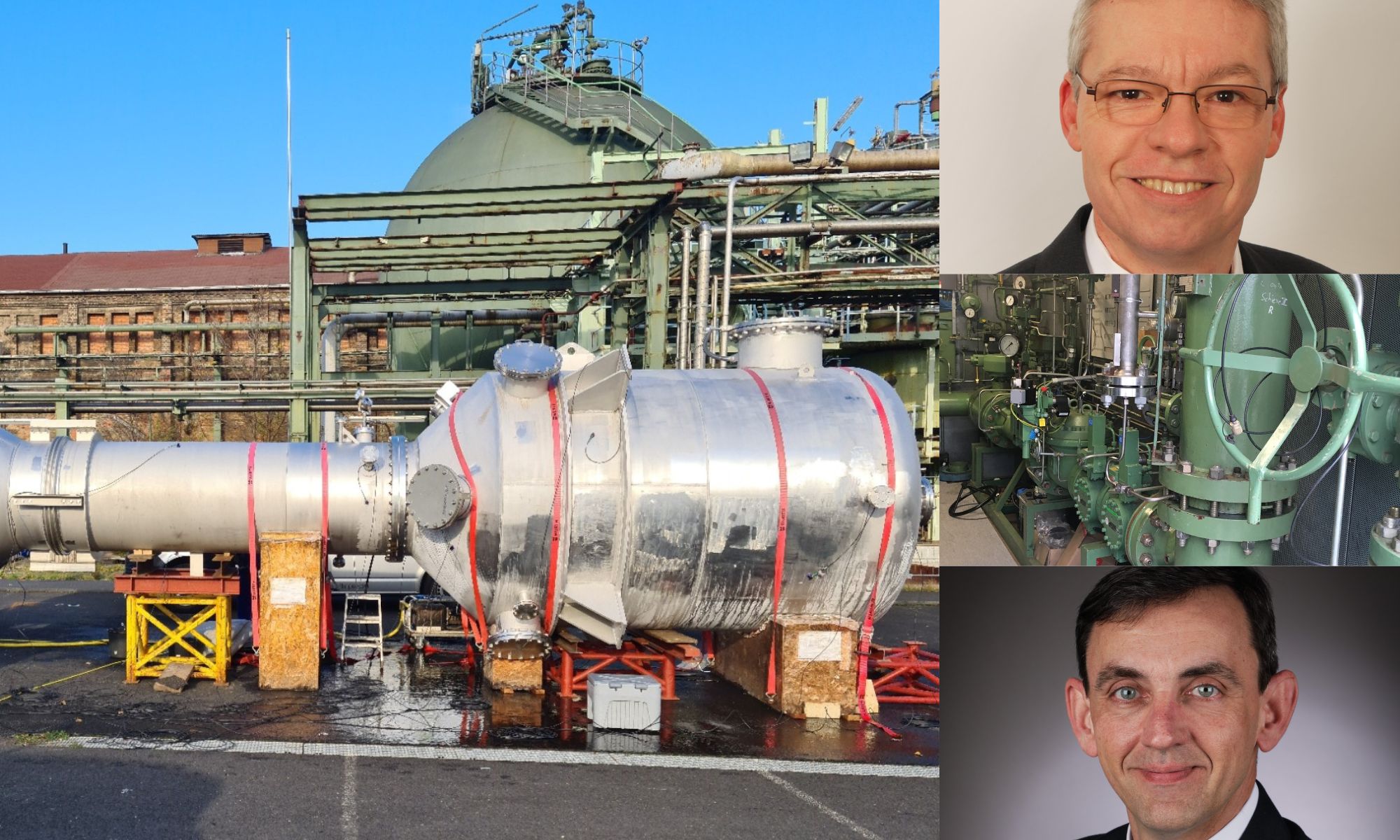
Breakthroughs in sensor technology and data interpretation are driving the rise of acoustic emission testing (AT) in the chemical industry.
Companies use this method by capturing signals to identify developing faults or damage inside equipment well before they become critical. Plant operators benefit from this early warning system, using continuous monitoring to fine-tune their maintenance efforts — and significantly reduce costs, explain TÜV SÜD’s Rainer Semmler and Hermann Schubert…
Chemical plants are increasingly turning to specialised sensors — such as piezoelectric types — that are mounted directly on equipment. These sensors are tuned to pick up transient elastic waves generated by even the tiniest material shifts under stress. One of the key advantages of AT is that it can be conducted without shutdown, maximising operation time. It also helps flag issues like fatigue or cracking early on, allowing for smarter, more targeted maintenance scheduling. Today’s testing systems go even further: they provide deeper diagnostics, tracking not only wear and tear but also shifts in flow behaviour, mixing ratios, and internal buildup.
At TÜV SÜD acoustic emission testing is used to fulfil the routine inspection requirements for pressurised equipment set out by the German Industrial Safety Ordinance (BetrSichV). In many cases, it can stand replace more invasive methods — like internal visual checks or hydrostatic pressure tests. With AT, these vessels can be assessed without draining, cleaning, or filling with water — a big win in terms of time, cost, and operational risk. The result: faster, cheaper, and safer assessments, even during ongoing production. Engineers apply this method to various process components — including pressurised equipment, heat exchangers, and mechanical equipment. In the case of machines, this means mainly rotating parts, such as pumps, compressors, motors, or turbines. To help plant operators anticipate the economic benefits of AT, TÜV SÜD uses a tool to calculate the projected savings one can expect before the start of inspection.
Example: polymer resin production
A chemical plant manufactures polymer resins for use in car parts and packaging. Its setup includes a network of tanks and reactors that drive chemical reactions under carefully controlled conditions. These processes typically involve cycles of heating, cooling, and mixing under pressure — putting a lot of stress on the pressure-bearing components, which must be inspected regularly to maintain structural integrity and avoid costly production halts. This plant alone sets aside about one million euros per year for inspection-related expenses.
Acoustic emission testing eliminates the need to fill tanks with water to reach test pressure. That, in turn, removes the risk of corrosion from leftover moisture. On top of that, the plant cuts about 20% off its annual inspection budget — a saving of around €200,000. Skipping the drying process required after hydrostatic tests also shortens downtime by roughly two days. Given that the plant “earns” about €80,000 per day, this adds another €160,000 in recovered revenue.
Because tanks remain sealed during AT, there’s no need to open them — meaning no seal replacements and no labour costs for installing new ones. For reactors opened every other year, that adds up to annual savings of roughly €25,000 — around 2.5% of the plant’s total inspection spend. It also reduces the likelihood of leaks, as original gaskets remain undisturbed.
One of the standout benefits of AT is its ability to detect wear like cracks or corrosion before they cause failure. With this early insight, operators can proactively plan maintenance rather than reacting to emergencies. At this particular facility, where unplanned maintenance used to cost around €50,000 per year, AT has the potential to shave off 80% of that — saving €40,000 annually. More strategic repairs also help extend the lifespan of parts, lowering long-term expenses.
AT also allows for more than one system to be tested simultaneously — a capability that is often overlooked. In this example, grouping several pressure vessels and reactors into a single testing session trims inspection costs by about 10%, saving an extra €100,000 per year. Less manpower is needed, and inspection times are shortened — making planning and execution much smoother.
Another major plus: AT can be easily integrated into existing non-destructive testing (NDT) routines. This means follow-up checks can be laser-focused and efficient, avoiding complicated or costly re-tests. When used this way, AT can unlock another 5% in annual savings — about €50,000. Fewer resources are used, inspections are more targeted, and maintenance becomes more sustainable overall.
As AT can be performed while the plant is running, there is no need for the usual shutdown and restart cycles that create stress from pressure or temperature swings. Such stress often shortens component lifespans. Avoiding it leads to about 5% savings on annual investments in spare parts — or around €200,000 — translating to a yearly reduction of €10,000 in equipment costs.
Bottom line, big impact
Altogether, the plant saves roughly €585,000 every year by using AT. It’s worth noting that the method itself is not necessarily cheaper — the real savings come from avoiding prep work, drying, water disposal, and production losses. Material costs also go down. Even with a conservative estimate of 70% realisation, the plant would still save about €409,500 per year. Over time, this strategy not only improves efficiency and system uptime but also helps boost sustainability — a competitive edge in an industry where clients are placing more and more value on environmental responsibility.
Rainer Semmler (top right in pic) is head of process safety management and Hermann Schubert (bottom right) is head of digital and continuous inspection, at TÜV SÜD Industrie Service
