
How AI can transform legacy oil and gas operations
3 Aug 2025
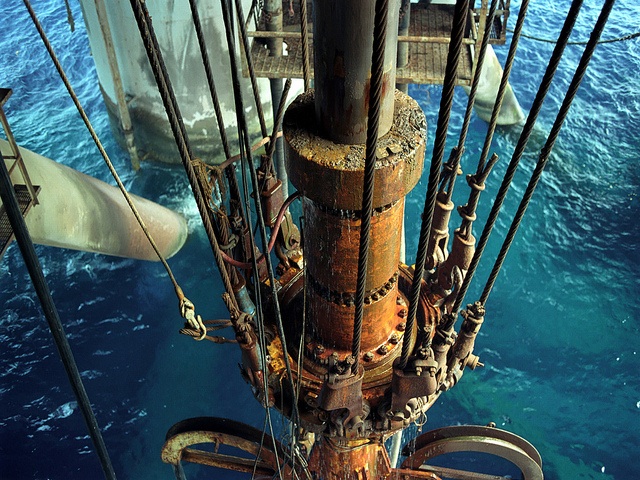
The oil and gas sector is undergoing seismic change. As part of the broader transition toward sustainability, the industry is under pressure to decarbonise operations, reduce methane emissions, and minimise the environmental impact of hydrocarbon extraction.
But as the sector pushes to modernise, it’s grappling with two persistent challenges: ageing infrastructure and a widening ‘digital delta’, says Phil Weatherson …
Legacy assets are a liability - not just for day-to-day operations, but for long-term strategy, compliance, safety, and institutional knowledge. These systems are often supported by outdated documentation, disjointed data sets, and little to no integration across teams. The result? A fragmented picture of the asset base that hinders decision-making and slows progress.
This fragmentation is what we refer to as the ‘digital delta’: the gap between physical reality and what the digital records are meant to reflect. Research shows industrial sites face data gaps of up to 30% in their technical documentation, exposing businesses to unnecessary risk, inefficiencies, and unplanned downtime.
O&G operators are managing a tangled web of systems accumulated over decades. While these tools were adopted with good intent, they’ve created data silos, elevated operating costs, and blurred visibility over field assets. There’s no consistent source of truth, and often no one left who fully understands how it all fits together.
This is a global issue, not just one isolated to the UK or Europe. McKinsey nailed it when they said most companies treat digital transformation as “a series of discrete, siloed projects.” That might work during pilot phases, but at scale, it falls apart. Success hinges on seamless integration between digital solutions and the broader IT/OT landscape.
Even companies that have adopted digital twins still find themselves falling short. Why? Because these models can quickly become obsolete if not constantly updated with real-time site data. Traditional scan-to-BIM workflows are manual, time-consuming, and rarely keep pace with field modifications.
A particularly common issue is the disconnect between 3D models and outdated piping and instrumentation diagrams (P&IDs). Field teams often make changes that are never logged, leaving engineering teams flying blind. Without a unified, live model of the site, collaboration breaks down.
To move forward, operators, engineers, and contractors all need access to the same, current information, and that requires connecting real-world data with up-to-date digital records.
AI as gamechanger
This is where AI steps in. AI can power what’s known as a shared reality - a digital environment that helps rapidly tie together 3D reality capture with technical documentation, equipment lists, and P&IDs.
Here’s how it works:
- Object recognition: 3D AI automatically detects assets in 3D scans and creates an inventory - even if there’s no existing data. 2D AI also detects assets from P&ID, even if it is a paper-based scan or a simple PDF document.
- Contextual linking: Users can then connect these assets across 3D and their associated technical information (P&ID, equipment lists), enabling a dynamic, living model of the site.
- Human-AI collaboration: In piping-intensive facilities, an AI Copilot can assist the end-user in the linking process, creating a hybrid workflow that’s both scalable and auditable.
Unlike static digital twins, this shared reality can evolve with the site. The result is a single source of truth for all teams - engineers, maintenance crews, operators, and contractors alike, which can work standalone, or connected to existing systems of record (ERP, CMMS, SCADA…).
As the O&G industry races to modernise and decarbonise, the digital delta threatens to hold it back. Outdated technical data doesn’t just slow down maintenance - it obstructs transformation.
AI is now helping to bridge that gap. By continuously connecting physical assets with digital records, human-in-the-loop AI delivers the visibility, accuracy, and collaboration the sector needs. The bottom line? The O&G sector doesn’t just need digital transformation, it needs a rapid, scalable and open transformation. And shared reality is making that possible.
Phil Weatherson is UK & Ireland regional lead at Samp
